
Trying to Pack Too Much Into Every Event
A lot of couples begin planning multi-day Indian weddings with the assumption that more automatically feels grander. More performances, more entrances, more outfit changes, more décor moments, more late-night events squeezed into an already overloaded schedule. What actually happens is that the wedding starts running on survival mode by day two. Hair and makeup fall behind. Transportation delays pile up. Guests disappear to their hotel rooms for an hour just to breathe. Even beautiful events lose their energy when the pacing is relentless. The weddings that feel polished are usually the ones that leave room for people to actually experience what is happening instead of constantly rushing toward the next thing.
Designing Every Function Without a Shared Identity
This happens more often than people realize. Couples want every event to look completely different, so the mehndi becomes ultra-colorful, the sangeet turns nightclub-inspired, the ceremony goes traditional, and the reception suddenly shifts into modern white luxury. Individually, each concept may look attractive, but together, the wedding can start feeling visually disconnected. The strongest multi-day weddings usually carry subtle continuity across every event. Sometimes it is the floral palette, sometimes the lighting language, sometimes the textures, or the way tablescapes evolve across the weekend. We see this especially with seasonal floral designs in Long Island venues, where the surroundings already influence the atmosphere. Fighting against the natural environment rarely works as well as building with it.
Underestimating Venue Logistics
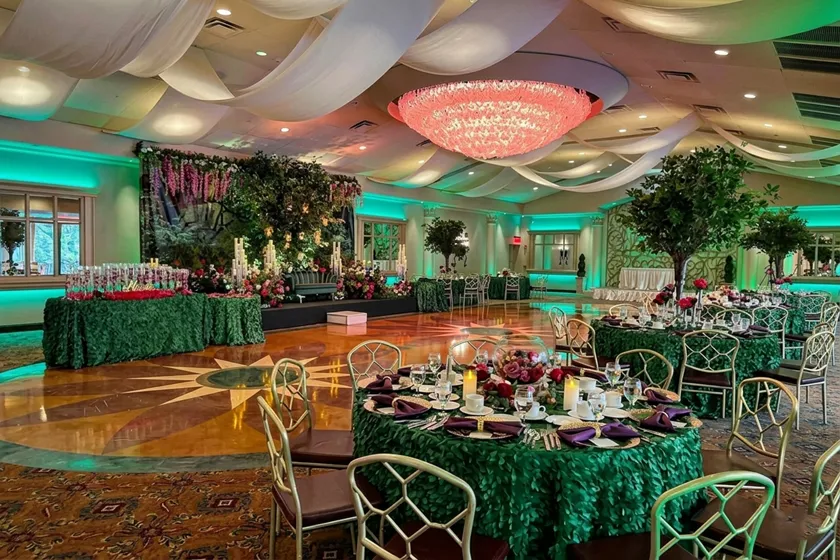
People tend to underestimate how physically demanding large wedding productions actually are. A ballroom transformation that looks effortless online often involves overnight labor crews, strict loading dock schedules, elevator timing, staging restrictions, and installation teams working against impossible deadlines. Couples book venues based on appearance without fully understanding how the space functions once multiple events enter the equation. A ceremony setup may photograph beautifully, but create traffic problems for guests. A dramatic floral installation may interfere with sightlines or entertainment staging. These are not glamorous details, but they are usually the difference between a wedding that flows naturally and one that feels chaotic behind the scenes.
Forgetting the Guest Experience
Guests notice more than couples think they do. They notice when transportation instructions are unclear. They notice when cocktail hour stretches too long because the reception room is still being flipped. They notice when elderly family members have nowhere comfortable to sit between functions. Luxury is rarely about excess. Most of the time, it comes down to comfort, timing, movement, lighting, sound, and atmosphere working together properly. Some of the most expensive weddings still feel strangely stressful because the guest experience was treated as secondary to visual impact.
Ignoring Seasonal Reality During Floral Planning
Flowers are one of the first things couples obsess over and one of the last things they fully understand. Certain blooms simply do not tolerate summer humidity well, especially during outdoor ceremonies or heavily lit receptions. Others bruise during transport or collapse midway through long wedding days. This is why seasonal floral designs in Long Island weddings tend to feel richer and more grounded when they are planned thoughtfully. The flowers behave better, the palettes sit more naturally inside the venue, and the arrangements photograph more consistently across changing light conditions throughout the day. Trying to force completely out-of-season concepts usually creates unnecessary production issues that couples never see coming.
Spending Aggressively at the Beginning and Pulling Back Later
Budget imbalance quietly affects a lot of multi-day weddings. Couples spend heavily on one dramatic moment early in the process, then start trimming details that directly affect the overall experience. The oversized floral entrance remains untouched while guest transportation gets reduced. The stage design stays massive while lounge seating disappears. Strong weddings are rarely built around one spectacle. They are built around consistency. A few things couples regularly underestimate are:
- Realistic setup and breakdown timing
- Guest transportation flow between venues
- Overnight production labor
- Recovery time between functions
- Weather adjustments for outdoor events
Why Experienced Planning Changes Everything
A skilled indian destination wedding planner is not simply coordinating vendors and timelines. The real job is managing momentum across several days without letting the experience lose shape or energy. Multi-day celebrations involve moving parts that overlap constantly, especially in New York, where venue regulations, timing restrictions, and production schedules can become complicated very quickly. Working with an indian destination wedding planner NYC couples rely on often means catching problems before they become visible to anyone else in the room.
Conclusion
At Glamorous Event Planners, we believe the best weddings are the ones people keep talking about months later because they felt seamless, immersive, and emotionally alive from beginning to end. Good planning is not about controlling every second. It is about creating enough structure for people to relax into the experience naturally. If you are planning a multi-day wedding and want help from a team that knows both the creative and logistical aspects of huge celebrations, contact us immediately to start designing something significant from the first event to the last farewell.
FAQs
1. How far in advance should couples start planning a multi-day Indian wedding?
Most large Indian weddings should begin planning at least 12 to 18 months, especially when multiple venues, large guest counts, and custom décor installations are involved.
2. Why do multi-day Indian weddings often run behind schedule?
Tight timelines, outfit changes, transportation delays, and extended ceremonies can quickly affect the flow of the entire weekend if not carefully managed from the beginning.
3. Are seasonal flowers better for large wedding events?
Seasonal flowers usually hold up better during long celebrations because they are naturally suited to the weather, lighting conditions, and venue environment at that time of year.
4. What is the biggest mistake couples make during wedding budgeting?
Many couples overspend on one dramatic visual moment early on and later cut guest-focused details that actually shape the overall experience of the wedding.
5. Why is hiring an experienced wedding planner important for multi-day celebrations?
Large Indian weddings involve constant coordination between vendors, venues, timelines, and guest logistics, which becomes difficult to manage smoothly without professional oversight.
